
KODAGU • COORG • ಕೊಡಗು
The Complete History of Coorg
A digital archive of Kodagu — a small highland country in the Western Ghats with its own dynasty, language, martial tradition and contested past. Every claim here is labelled by the kind of evidence behind it, and every page cites its sources.
- EVENTS
- 26
- SOURCES
- 63
- ERAS
- 7
- SPAN
- 3000 BCE –
Where to begin
Four ways into Kodagu
The archive is organised as a museum would be: chronology, geography, community and language.
History
From Iron Age megaliths to the 1956 merger, era by era.
Open the timelineHistorical atlas
Forts, temples, battle sites and settlements, mapped.
Open the mapKodava culture
Okka and ainmane, ancestor veneration, festivals, land.
Meet the communityKodava Takk
A Dravidian language, its documentation and literature.
Read about the languageChronology
Seven eras
Kodagu's past is usually told in these stretches. The timeline lets you filter within and across them.
c. 3000 BCE – 300 BCE
Prehistoric & Megalithic
Neolithic celts and Iron Age megalithic burials place people on these ridges long before any written record of them.
c. 300 BCE – 900 CE
Ancient & Early Historic
Sangam-era Tamil literature supplies the earliest possible textual glimpses; epigraphy begins to speak from the ninth century.
c. 900 – 1600 CE
Medieval Overlordship
Gangas, Cholas, Changalvas, Kongalvas and Hoysalas exercise varying degrees of authority over the hill tracts.
c. 1600 – 1834
The Haleri Kingdom
A branch of the Keladi–Ikkeri Nayakas establishes a dynasty at Haleri and rules Kodagu for over two centuries.
1763 – 1799
The Mysore Conflicts
Hyder Ali and Tipu Sultan repeatedly invade, occupy and lose Kodagu; the period leaves deep and contested memories.
1834 – 1947
British Kodagu
Annexation, coffee, revenue settlement, missionary scholarship and the making of a colonial province.
1947 – present
Independence & After
Coorg becomes a Part C State, merges into Mysore in 1956, and becomes Kodagu district of Karnataka.
Turning points
Moments worth knowing first
c. 3000 – 1200 BCE
Scholarly InterpretationNeolithic tool-users in the Kodagu uplands
Polished stone celts recovered from surface and habitation contexts in Kodagu indicate Neolithic activity in the district.
c. 1200 BCE – 300 CE
DocumentedIron Age megalithic burial traditions
Dolmenoid cists, cairn circles and menhirs cluster across eastern Kodagu — more than forty burial clusters are reported in one recent survey.
c. 300 BCE – 300 CE
UncertainPossible Sangam-era references to the hill country
Classical Tamil literature refers to western hill peoples and territories that some historians read as including the Kodagu tract.
9th century CE (reported 2024)
DocumentedSixty-nine inscriptions reveal an epigraphic Kodagu
An Archaeological Survey of India documentation drive reported 69 stone inscriptions in Kodagu, the earliest from the ninth century, including evidence of Chola influence and now-lost temples.
Method
History, tradition and the difference between them

The archive rests on printed and archival sources, from 19th-century accounts to modern scholarship.
Commissioned illustration for this project.
Illustrative image, not a historical photograph.
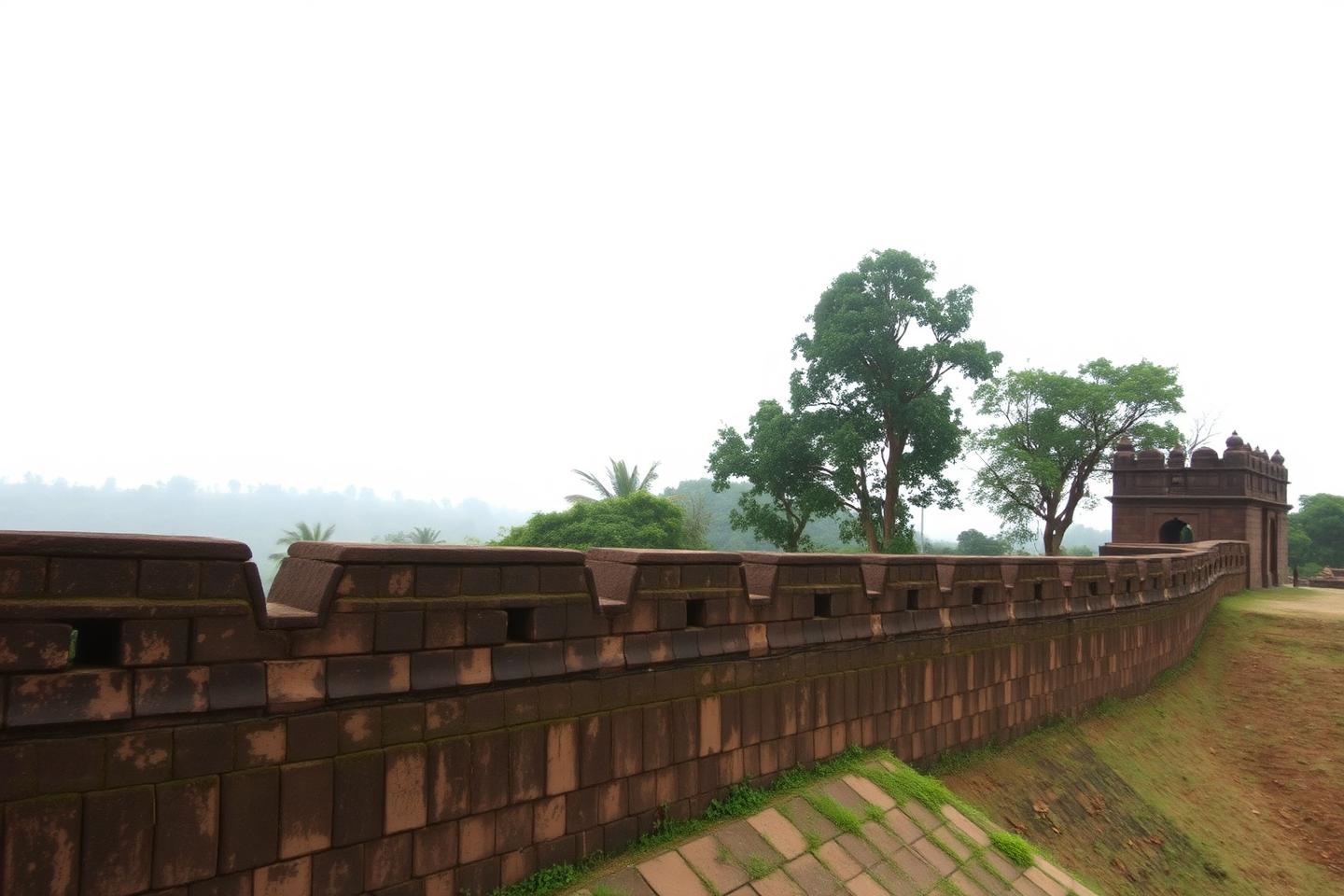
Madikeri, the Haleri capital, and its much-rebuilt fort.
Commissioned illustration for this project.
Illustrative image, not a historical photograph.