Skip to content

Chapter one

Prehistoric & ancient Kodagu

For most of Kodagu's past there is no text at all — only stone. Burial monuments, scattered tools and, much later, a handful of inscriptions carry the story until dynastic records begin to mention these hills.

Before writing

Stone before script

Scholarly Interpretation

Neolithic and Iron Age material has been recorded across the uplands, but Kodagu has seen far less systematic excavation than neighbouring regions, so dating usually rests on broader South Indian sequences.

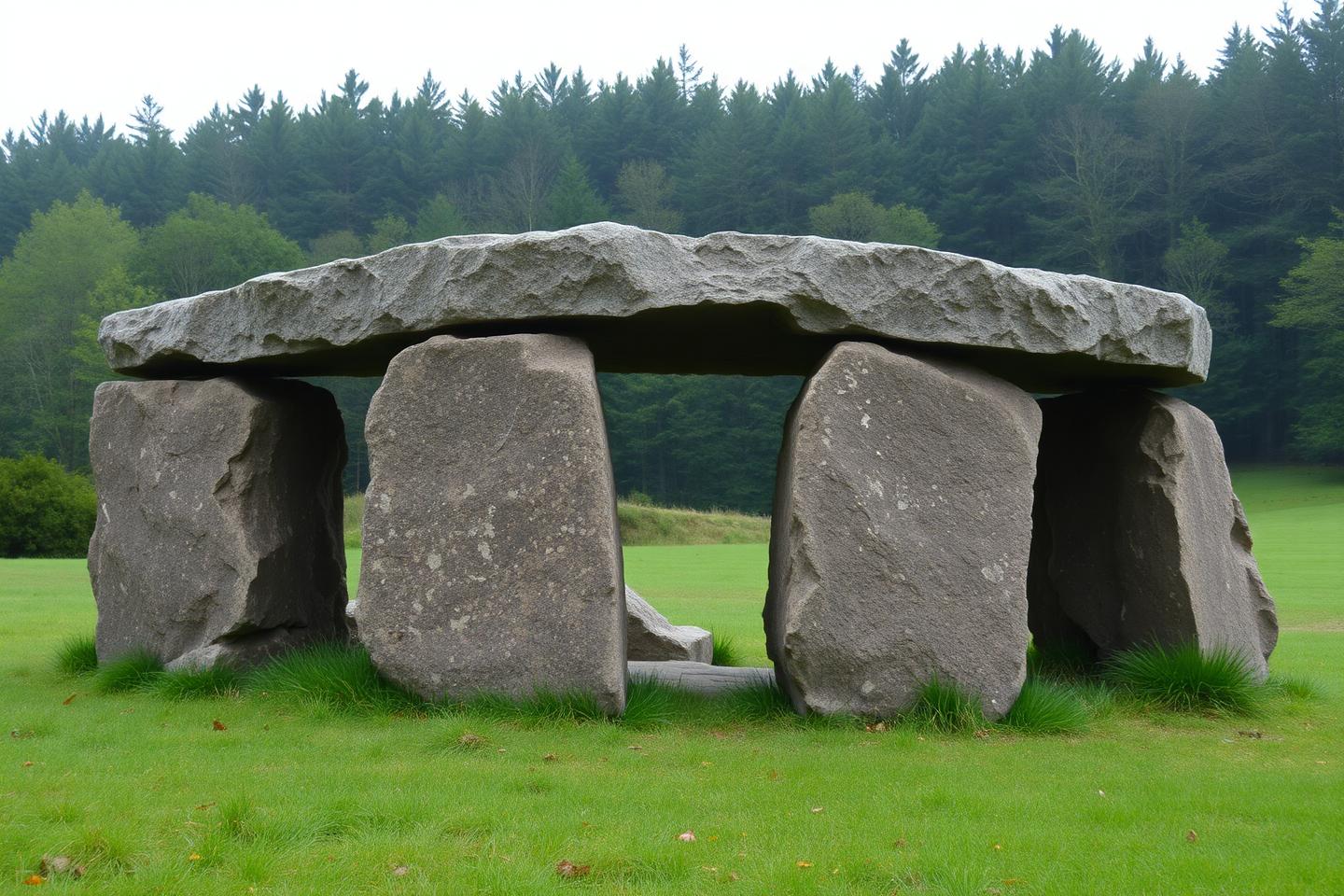
The most visible antiquities are megalithic: dolmens of upright slabs capped by a horizontal stone, cairns and stone circles, generally associated with the South Indian Iron Age. They mark the dead, not settlements, so they tell us about ritual and social organisation more readily than about population or economy.

Local tradition often attributes these monuments to a race of giants or to earlier peoples displaced by the Kodavas. That belongs to tradition, not to archaeology, and this archive keeps the two apart.

Sources & Further Reading

Full bibliography
A dolmen of upright stone slabs capped by a horizontal slab in grassland

Dolmens of the kind recorded across the Kodagu uplands.

Commissioned illustration for this project.

Illustrative reconstruction, not a photograph of an excavated site.

Earliest texts

Sangam hints and early epigraphy

Chronology

Events in this period

  1. c. 3000 – 1200 BCE

    Scholarly Interpretation

    Neolithic tool-users in the Kodagu uplands

    Polished stone celts recovered from surface and habitation contexts in Kodagu indicate Neolithic activity in the district.

    Kodagu sits at the margin of the well-studied South Indian Neolithic zone. Finds are reported in archaeological survey literature rather than from large excavated sequences, so absolute dating for the district itself remains weak.

  2. c. 1200 BCE – 300 CE

    Documented

    Iron Age megalithic burial traditions

    Dolmenoid cists, cairn circles and menhirs cluster across eastern Kodagu — more than forty burial clusters are reported in one recent survey.

    Chandan Kumar and Shobha's 2023 study of Moribetta and Morikallu records over forty megalithic burial clusters on the eastern edge of the Western Ghats in Kodagu district. The broader South Indian megalithic horizon runs roughly 1200 BCE to 300 CE; individual Kodagu monuments are rarely independently dated.

    Sources & Further Reading

    Full bibliography
  1. c. 300 BCE – 300 CE

    Uncertain

    Possible Sangam-era references to the hill country

    Classical Tamil literature refers to western hill peoples and territories that some historians read as including the Kodagu tract.

    These identifications are inferential. Sangam poetry names regions and chieftains without the geographic precision needed to fix a modern district boundary, and different scholars map the same lines to different parts of the Ghats.

  2. 9th century CE (reported 2024)

    Documented

    Sixty-nine inscriptions reveal an epigraphic Kodagu

    An Archaeological Survey of India documentation drive reported 69 stone inscriptions in Kodagu, the earliest from the ninth century, including evidence of Chola influence and now-lost temples.

  1. c. 1004 – 1175 CE

    Scholarly Interpretation

    Gangas, Cholas, Changalvas and Hoysalas

    Kodagu falls within the shifting spheres of the Western Gangas, the Cholas, the local Changalva and Kongalva lines, and later the Hoysalas.

    Control here means tribute, garrisons and temple patronage rather than continuous direct administration. The hill interior retained substantial local autonomy throughout.