Culture
The Kodava people
ಕೊಡವ
Kodagu's historically dominant landholding community, organised around the patrilineal okka and its ancestral house. Kodagu has never been home to only one community, and this section tries to say so plainly.
Society
Okka, ainmane, nad
DocumentedThree units carry most of the social structure: the clan, the house that anchors it, and the territorial division above both.
An okka is a patrilineal joint family holding ancestral land and name in common. Membership passes through the father's line; marriage within the okka is prohibited. The okka's ritual centre is the ainmane, the ancestral house, where births, marriages, death rites and festivals are observed and where the ancestors are addressed.
Above the okka sat the nad, a grouping of villages with its own headman — the unit through which the Haleri kingdom and later the British administration actually governed. Land tenure in Kodagu was recognised in distinctive forms, and land, clan and identity are difficult to separate in the historical record.
Kodagu's population also includes Kodava-speaking and Kannada-speaking communities of many kinds — Amma Kodava, Airi, Kembatti, Kudiya, Yerava, Kuruba and Gowda groups, Moplah and Muslim traders, Tulu and Malayali settlers, and the labour communities that came with coffee. Writing only about the Kodava would misdescribe the district.
Sources & Further Reading
- G. Richter, Gazetteer of Coorg, 1870
- Wikipedia contributors, Ainmanes — Kodava ancestral clan houses
- Sahapedia, Kodagu: the ainmane, the kanni mule and ritual space
- Office of the Registrar General & Census Commissioner, India, District Census Handbook: Kodagu, Karnataka (Census of India 2011), 2011
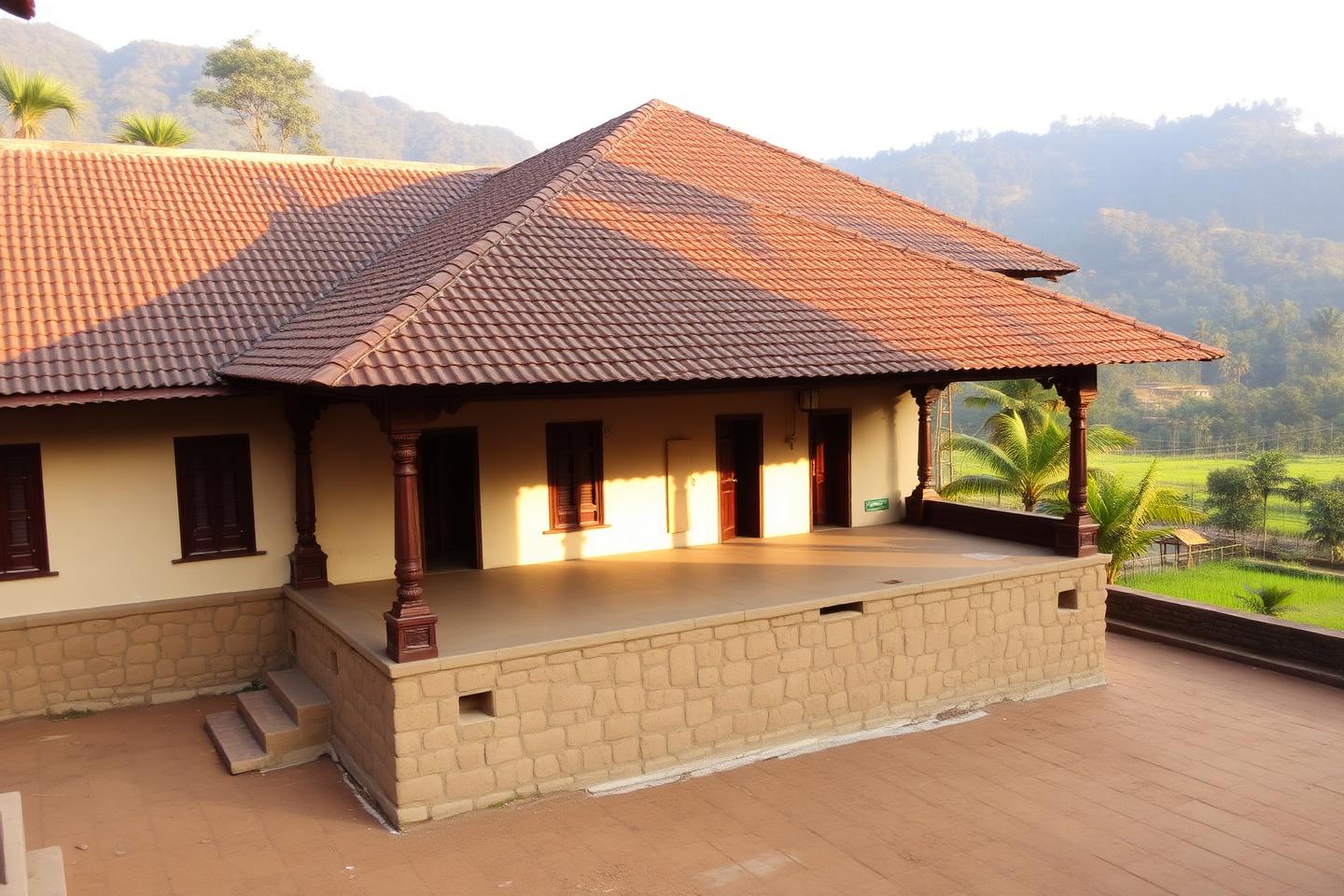
An ainmane: courtyard, verandah and the raised place where ancestors are remembered.
Commissioned illustration for this project.
Illustrative image, not a photograph of a named ainmane.
Origins
What is claimed, and what is established
DisputedOrigin stories are historical evidence about the people who tell them, not about the distant past they describe.
Sources & Further Reading
- Bhadriraju Krishnamurti, The Dravidian Languages, 2003
- Murray B. Emeneau, Studies on Kodagu (Coorg) phonology, kinship terminology and Dravidian comparison, 1938–1970s
- G. Richter, Gazetteer of Coorg, 1870
- Sahapedia, Kodagu: the ainmane, the kanni mule and ritual space
Continue
Related sections
- Sacred traditions
Ancestors, Karana and kaimada.
- Festivals
The three great observances.
- Kodava Takk
Classification, script and numbers.